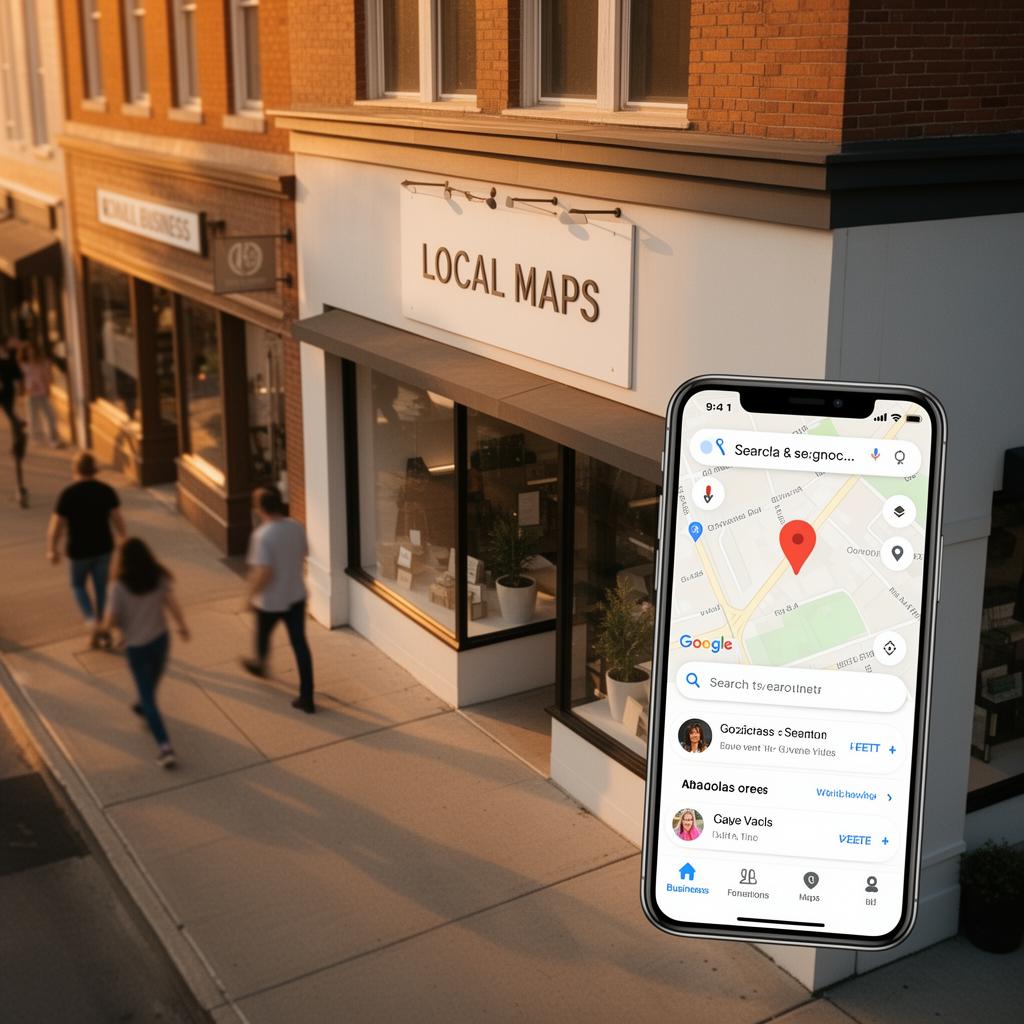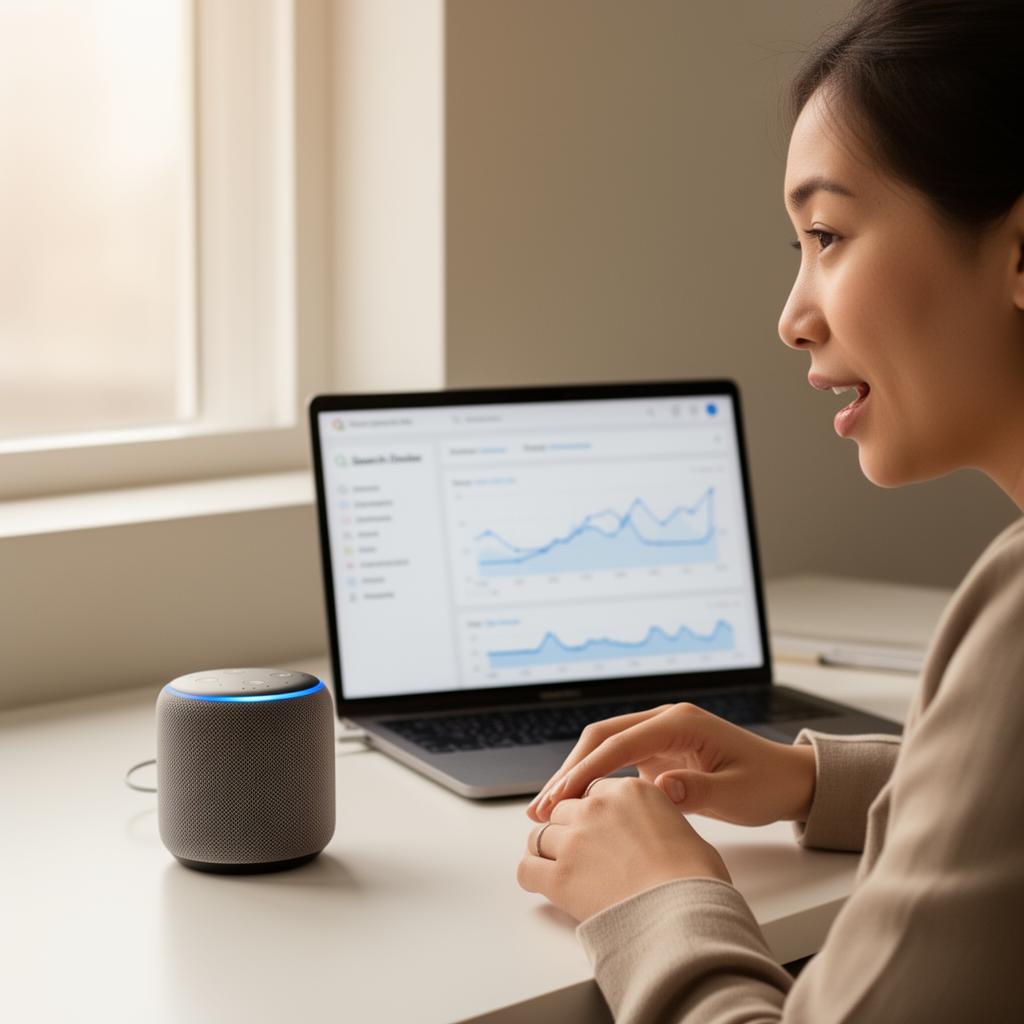
Search has split into two worlds. In the first world, users type queries and scan a list of blue links. In the second — the one growing fastest — users ask questions and receive direct answers from AI systems like Google AI Overviews, ChatGPT, Perplexity, and voice assistants.
If your business only optimizes for the first world, you are missing the fastest-growing source of customer discovery. Answer Engine Optimization (AEO) and Generative Engine Optimization (GEO) are the disciplines that ensure your business appears when AI systems answer questions about your industry and service area.
This is not theoretical. Google now shows AI Overviews on over 30% of search queries. ChatGPT has integrated web browsing into its responses. Perplexity is becoming a primary research tool for high-intent buyers. When someone asks "who is the best HVAC company in Phoenix" and an AI answers — your business needs to be in that answer.
This guide explains what AEO and GEO are, how they differ from traditional SEO, and the specific actions you can take to get your business featured in AI-generated responses.
What Is Answer Engine Optimization (AEO)?
AEO is the practice of structuring your content so that answer engines — Google AI Overviews, featured snippets, voice assistants, and AI chatbots — can extract clear, authoritative answers from your website.
Traditional SEO optimizes for rankings. AEO optimizes for being the answer.
The difference is structural. A traditional SEO page might rank #1 for "how to fix a leaking faucet" but still not be featured in the AI Overview if the content is not structured for extraction. AEO ensures your content is formatted so AI systems can pull concise, accurate answers.
Why AEO matters for local businesses: • Voice search queries are almost always local — "find a plumber near me" or "what dentist is open right now" • Google AI Overviews increasingly answer service-related questions with local business recommendations • Smart assistants (Alexa, Siri, Google Assistant) pull answers from optimized content • Customers trust AI-curated answers more than they trust organic rankings
How to Structure Content for AEO
AI systems extract answers most reliably from content that follows predictable patterns:
- Question-and-answer format — Use the exact question as an H2 or H3, then answer it directly in the first 1-2 sentences below. Follow with supporting detail.
- Concise definitions — When explaining a concept, lead with a clear one-sentence definition before expanding.
- Structured lists — AI systems love numbered lists and bullet points. "The 5 steps to winterize your HVAC system" is more extractable than a long paragraph covering the same information.
- Tables for comparisons — If you compare services, pricing tiers, or options, use HTML tables. AI Overviews frequently pull from tables.
- FAQ sections with schema markup — FAQPage schema tells Google "these are questions and answers." This dramatically increases the chance of being featured.
- Clear entity identification — Make sure your content clearly states who you are, what you do, and where you do it. AI systems need to understand the entity behind the content.
PixlSEO's content generation system automatically structures blog posts with FAQ schema, clear headings, and answer-friendly formatting. This means every piece of content published through the platform is AEO-ready by default.
What Is Generative Engine Optimization (GEO)?
GEO is the broader discipline of optimizing your digital presence so that large language models (LLMs) — ChatGPT, Gemini, Perplexity, Claude — reference and recommend your business when users ask relevant questions.
Unlike AEO, which focuses on structured content extraction, GEO is about building the kind of digital footprint that LLMs draw from during training and real-time web retrieval.
LLMs form their "knowledge" from: • Your website content — especially well-structured, authoritative pages • Reviews and ratings — Google reviews, Yelp, industry-specific review sites • Directory listings and citations — consistent NAP data across the web • News mentions and press coverage • Social media presence and engagement • Third-party content that mentions your business • Structured data and schema markup on your website
The key insight is that LLMs do not just rank pages — they synthesize information from multiple sources to form an opinion about entities (businesses, people, products). The more consistent, positive, and authoritative your digital footprint, the more likely LLMs are to recommend your business.
GEO for Local and Service Businesses
Local businesses have a unique GEO advantage: geographic specificity creates a natural moat. An LLM can only recommend a "plumber in Scottsdale" if there is sufficient data about plumbers who specifically serve Scottsdale.
How to build your local GEO presence:
- Claim and optimize every directory listing — LLMs reference directory data heavily. If your business appears consistently across Yelp, Angi, BBB, and industry-specific directories, LLMs have more sources to draw from.
- Generate a steady stream of reviews — Reviews are one of the strongest signals LLMs use to evaluate businesses. A business with 200 reviews averaging 4.7 stars is far more likely to be recommended than one with 15 reviews.
- Publish expert content about your service area — Blog posts, guides, and resources about your specific industry in your specific location build topical authority that LLMs recognize.
- Get mentioned by other local entities — Local news coverage, Chamber of Commerce features, partnership announcements, and community involvement create the kind of third-party mentions that LLMs trust.
- Create a clear, comprehensive About page — LLMs need to understand what your business is, who runs it, where it operates, and what makes it different. A detailed About page with schema markup helps.
PixlSEO's LLM visibility reporting feature lets you track how AI models reference your business. You can run queries against multiple LLMs and see whether your business appears in their responses, how it is described, and how you compare to competitors. This turns GEO from guesswork into a measurable discipline.
llms.txt: Helping AI Understand Your Business
An emerging best practice in GEO is the llms.txt file — a plain text file placed at the root of your website (similar to robots.txt) that provides structured information about your business specifically for LLM consumption.
A well-crafted llms.txt file includes: • Business name and description • Services offered with clear descriptions • Service areas and locations • Key differentiators and credentials • Contact information • Links to important pages on your site
Think of it as an executive summary of your business that AI systems can quickly parse. While not all LLMs use llms.txt yet, adoption is growing, and early implementation signals forward-thinking optimization.
PixlSEO offers a free llms.txt generator tool that creates a properly formatted file based on your business information. You can also use the platform's automated content pipeline to keep your llms.txt updated as your services and areas evolve.
Voice Search Optimization for Local Businesses
Voice search is the most natural form of AEO. When someone says "Hey Google, find me an emergency plumber," the assistant returns a single answer — not a list of ten options. Being that answer is the entire game.
Voice search queries are different from typed queries: • They are longer and more conversational — "what is the best rated Italian restaurant near downtown" vs "Italian restaurant downtown" • They are almost always local — 58% of voice search users look for local business information • They demand immediate answers — voice users expect a direct result, not "here are some websites to check" • They often include qualifiers — "open now," "near me," "best," "cheapest"
Optimizing for voice search: • Target conversational long-tail keywords in your content • Structure content to directly answer questions in 1-2 sentences • Ensure your GBP listing has accurate hours and contact information • Use SpeakableSpecification schema on FAQ and how-to content • Optimize for "near me" queries with strong local signals • Maintain 4.0+ review ratings — voice assistants often filter by rating
Building a Combined AEO + GEO + Local SEO Strategy
AEO, GEO, and traditional local SEO are not separate strategies — they are layers of the same visibility strategy. Here is how they work together:
Local SEO ensures you rank in Google Maps and the Map Pack for location-based searches. It is the foundation.
AEO ensures your content gets extracted into featured snippets, AI Overviews, and voice search answers. It turns your rankings into zero-click visibility.
GEO ensures AI chatbots and LLMs recommend your business when users ask for recommendations. It captures the growing share of discovery happening outside traditional search.
A practical weekly workflow: • Monday — Publish a new blog post optimized for AEO (question-based headlines, FAQ schema, concise answers) • Tuesday — Respond to all new reviews (this feeds both local SEO and GEO signals) • Wednesday — Audit and update one set of directory listings for NAP consistency • Thursday — Publish a GBP post with a seasonal or promotional focus • Friday — Review geo-grid rankings and identify areas needing attention
PixlSEO consolidates all of these workflows into a single platform. Automated blogging handles content publishing. AI review responses keep your response rate at 100%. Citation tracking monitors your NAP consistency. GBP post scheduling keeps your profile active. Geo-grid tracking measures your local visibility. LLM visibility reports track your AI search presence. And automated on-page audits ensure your technical foundation stays solid.
For agencies managing multiple clients, this integration is the difference between scaling to 50+ clients and hitting a wall at 10.
Key Takeaways
The search landscape in 2026 is fragmenting. Your customers are finding businesses through Google Maps, AI Overviews, ChatGPT, voice assistants, and traditional organic results. A strategy that only addresses one of these channels leaves visibility — and revenue — on the table.
Key takeaways: • AEO optimizes your content to be the answer in featured snippets, AI Overviews, and voice search • GEO builds your digital footprint so LLMs recommend your business in AI chatbot responses • Both AEO and GEO build on traditional local SEO — you need the foundation first • Structured content (FAQs, lists, tables) is far more likely to be featured by AI systems • Reviews, citations, and third-party mentions feed LLM knowledge about your business • Tools like PixlSEO make AEO and GEO measurable and scalable with LLM visibility tracking, automated content, and AI review management
Frequently Asked Questions
What is the difference between AEO and GEO?
AEO (Answer Engine Optimization) focuses on structuring content so answer engines like Google AI Overviews and voice assistants can extract direct answers. GEO (Generative Engine Optimization) focuses on building a digital presence that LLMs like ChatGPT and Perplexity reference when making recommendations. AEO is about content structure; GEO is about overall digital footprint.
Does AEO replace traditional SEO?
No. AEO builds on top of traditional SEO. You still need strong rankings, good content, and technical SEO fundamentals. AEO adds a layer of content structuring that makes your existing content eligible for AI-powered answer features.
How do I know if LLMs are recommending my business?
You can manually test by asking ChatGPT, Perplexity, and other LLMs about your services in your area. For systematic tracking, PixlSEO offers LLM visibility reports that run queries against multiple AI models and track your presence over time.
Is voice search really that important for local businesses?
Yes. 58% of voice search users look for local business information, and voice search usage continues to grow with smart speakers and in-car assistants. For service businesses, voice search queries like "find a plumber near me" are high-intent, high-conversion queries.
What is an llms.txt file?
An llms.txt file is a plain text file at your website root that provides structured information about your business specifically for AI systems to consume. It includes your business name, services, locations, and key information. PixlSEO offers a free llms.txt generator tool.